The Ugly Necklace Contest - Commentary
As we answer questions, we will try to include our responses on-line for all to see.
1. It's difficult to design an ugly necklace.
It's difficult to design an ugly necklace. Your mind and eye want to take you away from "ugly" toward good principles of jewelry design. While a good deal of perceptions about what is "ugly" is subjective, there is a strong, underlying objective grammar of good jewelry design that steers even the weakest designer away from "ugly".
As research into color has shown, your eye compensates for imbalances in color
relationships -- it tries to correct and harmonize them. You are prewired to
subconsciously avoid anything that is disorienting, disturbing or distracting.
Because of this, any jewelry designer attempting to achieve Ugly, has to have
enough control and discipline to override, perhaps to overcome, intuitive,
internally integrated principles of good design. The best jewelry designers
will be very aware of what these rules of design are, and thus be able to strategically,
not just intuitively, know how to manipulate and apply them.
2. The panel of judges has a list of about 20 jewelry design principles. They will use this as a check list against which to measure how many principles a particular necklace violated, and to what extent. The panel will also factor in a judgment call about the degree they believe the original designer of the necklace had some control over achieving the piece's "ugliness".
Here's a good website that has information about jewelry design principles/rules. How many of these has your ugly necklace violated?
also, see our article about judging criteria at
http://www.landofodds.com/store/ugliestcriteria.htm
[Beginning in 2008, rules also specify that the Ugly Necklace must consist of 75% beads.]
3. The Necklace should be Ugly, yet still function as a piece of jewelry. Better designers will demonstrate a degree of control over achieving these ends. Better designers will show a sense of how both the larger context within which the jewelry is worn, as well as the overall effects of the wearer wearing the piece, will increase the piece's Ugliness.
4. The exact criteria the panel will use are unpublished. However, some research on-line and in texts will quickly pull up an array of generally accepted jewelry design criteria. The easiest ones involve the use of color. For example, colors work well together in certain proportions. When using Yellow and Violet, a harmonious balance is achieved when Yellow is 25% of the piece and Violet is 75% of the piece. If the proportion actually used was, say, 50/50, then the piece would begin to look ugly.
5. The poem.
Jewelry is not merely art. It is wearable art. Appreciation of a piece very often depends on how, where and when it is worn. The poem is a fun way to make the judges aware of the designer's intentions, and to help them understand submission as "ugly, yet wearable art".
The poem, then, should illustrate, in a fun way, your choices about materials, designs, combinations, and clasp.
Don't forget to give your poem a TITLE. The title will set the tone for the viewer on-line.
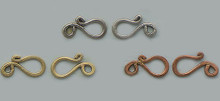
6. Because "functionality" is an important component of design, whether the necklace is ugly or not, judges will examine how the piece holds up functionally. They will examine how the piece was finished off, what kind of clasp and other supporting systems are designed, that contribute both to "ugliness" and "functionality" at the same time.
7. When designing your Ugly Necklace, try to picture who might wear it, and when. Some contextural visualization often helps in selecting the components to your design.
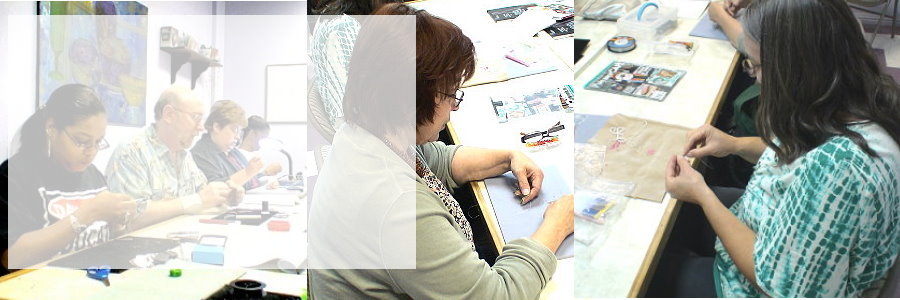
8. An Art Professor in a community college assigned the contest to her art students. Great idea. We received great submissions from all the students in her class, that were very sensitive to design issues (and how to violate or incorporate them).
9. An Ugly Necklace is more than a bunch of ugly beads strung on a cord. In fact, often, by stringing a set of ugly beads together, you might end up with an attractive necklace -- something more than the sum of its parts. One entrant had made a few dozen ugly lampwork beads. She strung them into two necklaces with some spacer beads between each one. The necklaces turned out to be beautiful, and she sold each one for about $225.00.
10. Different participants interpreted "Ugly" in different ways. Some focused on the ugliness of each individual component. Some used materials that they felt conveyed a sense of ugly, such as llama droppings, or felted matted dog hair, or rusty nails, or a banana peel. Some focused on mood and consciousness, and how certain configurations of pieces and colors evoked these moods or states of consciousness. Others focused on combining colors which don't combine well. Still others focused on how the wearer's own body would contribute to a sense of ugliness, when wearing the piece, such as the addition of a "Breast Pocket" which would lay just below the woman's breast, or peacock feathers that covered the wearer's mouth, or the irritating sounds of rusty cow bells, or the icky feeling of a rotting banana peel on the skin.
11. Your Materials List:
Think of this as another opportunity-- (like your poem and your poem's title) -- to influence the on-line viewer to positively vote and evaluate your piece.
If you're smart, it will be more than a boring list of materials.
12. Images
We need hard-copy images. At least of:
- full view with someone wearing it
- close up
- clasp assembly
You can supplement this with additional images, if you want.
You may submit .jpg files (at least 300dpi).
REMEMBER: These images will be posted on-line for visitors to www.landofodds.com to review, vote and evaluate. Images on-line lose a lot of the details.
[You still have the poem and the materials list to make some of these details come alive for the viewer.]
Don't forget to write your name on the back of all your photos.
13. The web-page for each semi-finalist will remain posted on the Land of Odds web-site for as long as the web-site exists. That's great exposure for anyone. After all, this contest says that the semifinalists have some jewelry-design talent, because it isn't easy doing Ugly.
14. Question from viewer: "It seems to me that the entries are just a bunch of ugly very large elements, and there's not much design to them -- Trash on String."
It's difficult to do Ugly, and there are many different and legitimate approaches toward that end. I've noticed over the 3 years we've done this contest, that it is perhaps easier to use larger elements, than to create something that uses smaller beads and is eminently fashionable -- except perhaps that it's ugly.
As I wrote above, the entrants have approached the definition of Ugly from several different vantage points. Each is viable.
No matter how out-sized or not, or how bead-woven the piece is or not, the judges use a set of jewelry design criteria to evaluate the pieces submitted. The criteria are very rigorous.
But our challenge remains for all bead and jewelry artists: Create a well-designed, ugly necklace. The more wearable and let's say "rational/fashionable" it is, and yet still ugly, well, that's the noble goal. It ain't easy to accomplish.
Beginning in 2008, a requirement was set that the necklaces had to consist 75% of beads. This makes the design challenge harder, because people will have to work with smaller pieces, and they will have to rely more on design talents, rather than simply on ugly objects, to get their points across.
15. Ugly pieces do not make an ugly necklace.
A lot of the entries use things, which by themselves are ugly, but when assembled into a circle, no longer retain their "ugliness".
After you have assembled your necklace, try to visualize it as if it were composed of attractive beads and other elements. Does it still look ugly to you? If Yes, you probably have a winning entry.
16. What is considered a Bead?
A bead is an object with a hole through it. It is meant to be strung or positioned over a string or wire.
People have been very creative in turning objects into beads, including hollowing out chicken bones, matting dog hair, drilling a hole in llama droppings, putting a hole in the center of post-it notes. Really, the possibilities are endless.
17. What is stringing material?
The options here vary widely, and what is appropriate depends both on your assembly techniques, as well as the theme of your necklace. Stringing materials would include string, cable wire, threads, bead cord, hemp, rope, twine, leather, waxed cotton, hard wire, chain, dental floss, electrical wire or cord, yarn, grasses, elastic string or cord, fishing line. There are many creative possibilities. There's no reason you have to rely on only one stringing material within your piece.
18. Introduction of special rules in 2008 contest
The judges decided to make the contest a bit more difficult, in requiring that more of the parts in the necklace be beads, and limiting the length of the necklace to no more than 32". It's been obvious that it is easier to work "ugly" on a larger canvas with larger pieces. We also wanted our jewelry designer participants to better understand, appreciate and work within the maxim: A collection of ugly parts does not necessarily an ugly necklace make.
ABOUT
THE JEWELRY DESIGN CRITERIA
USED TO EVALUATE THE ENTRIES
IN THE UGLY NECKLACE CONTEST
- It Ain't Easy Doing Ugly, or as my momma says, "Ugly is as Ugly does."